

Long-term disability claims are won or lost based on the strength of your evidence. In 2026, insurance carriers are more aggressive than ever in scrutinizing claims, particularly for conditions that don’t show up clearly on imaging or lab tests—chronic illnesses, Long COVID, autoimmune conditions, fibromyalgia, chronic fatigue syndrome, mental health disorders, and similar conditions that significantly impact function but may lack “objective” medical findings.
At Kantor & Kantor, LLP, we’ve represented disability claimants for over 45 years, and we’ve learned exactly what evidence makes the difference between approval and denial. Whether you’re filing an initial claim, facing a denial, or preparing for an appeal, understanding which documentation matters most can dramatically improve your chances of success.
Medical Records: The Foundation of Every Claim
Medical records form the backbone of any LTD claim, but not all medical documentation carries equal weight. Insurance carriers look for specific elements:
Consistent Treatment History
Regular appointments with treating physicians demonstrate that your condition is ongoing and serious. Gaps in treatment raise red flags for carriers, who may argue that if you’re not seeking care, you must not be that disabled.
Detailed Clinical Notes
Brief, templated notes that simply list diagnoses won’t support your claim effectively. Your physicians should document specific symptoms you report, observable clinical findings during examinations, how your condition has progressed or worsened over time, and their clinical impressions about your functional limitations.
Diagnostic Test Results
While many disabling conditions don’t show clear abnormalities on standard tests, any objective findings strengthen your claim. This includes imaging studies, lab work, cardiac testing, pulmonary function tests, cognitive assessments, and specialized diagnostic procedures. Even if results are “within normal limits,” the fact that testing was performed demonstrates medical investigation of your symptoms.
Specialist Consultations
Seeing specialists appropriate to your condition adds credibility. If you have an autoimmune condition, rheumatology records are crucial. For Long COVID, consultations with pulmonologists, cardiologists, or neurologists may be relevant. Mental health conditions require documentation from a psychiatrist or psychologist. Specialists’ opinions about your prognosis and limitations carry significant weight.
Functional Impairment Evidence: Proving You Can’t Work
Diagnosis alone doesn’t qualify you for LTD benefits—you must prove that your condition prevents you from performing your job duties. This requires functional impairment evidence:
Restrictions and Limitations Statements
Your treating physicians should provide clear, specific statements about what you cannot do. Vague statements like “patient is disabled” or “unable to work” aren’t sufficient. Instead, effective documentation specifies:
- How many hours can you sit, stand, or walk in an 8-hour day
- Weight restrictions for lifting, carrying, pushing, or pulling
- Cognitive limitations affecting concentration, memory, or decision-making
- Frequency and duration of rest breaks needed
- Environmental restrictions (avoiding temperature extremes, chemicals, etc.)
- Limitations on reaching, bending, climbing, or repetitive movements
- Social limitations affecting interaction with coworkers or the public
Residual Functional Capacity (RFC) Assessments
These formal assessments detail exactly what you can still do despite your limitations. While often associated with Social Security disability claims, RFC assessments are also valuable for LTD claims. They translate medical conditions into functional terms that insurance carriers can apply to job requirements.
Activities of Daily Living (ADL) Impact
Document how your condition affects daily activities—personal care, household tasks, shopping, driving, and social activities. If you can’t consistently perform basic daily tasks, it’s unreasonable to expect you to maintain full-time employment. Keep detailed records of what you can and cannot do, and have family members or caregivers provide supporting statements if appropriate.
Provider Questionnaires: Getting the Details Right
Many LTD carriers send attending physician statements or questionnaires to your doctors. These forms are critical, yet physicians often complete them hastily between patients, providing incomplete or ambiguous responses that undermine their credibility.
Work With Your Physicians
When your doctor receives a questionnaire from your insurance carrier, offer to help. Provide them with a detailed summary of your symptoms, limitations, and how your condition affects your ability to work. Remind them of specific functional restrictions you’ve discussed during appointments. Many physicians are excellent clinicians but haven’t been trained in disability documentation—your input helps them provide the detailed information carriers need.
Review Completed Forms
If possible, ask to review questionnaires before they’re submitted. Look for:
- Consistency with your medical records
- Specific functional limitations rather than vague statements
- Clear connections between your diagnosis and your inability to work
- Accurate information about treatment history and prognosis
Supplemental Letters
If a questionnaire doesn’t capture the full picture, ask your physician to provide a supplemental letter with additional detail. This is particularly important for complex conditions or situations where standard forms don’t address your specific limitations.
Symptom Tracking: Creating Your Own Evidence
For conditions with fluctuating symptoms—fibromyalgia, chronic fatigue syndrome, Long COVID, autoimmune diseases, migraine disorders, and many others—daily symptom tracking creates powerful evidence:
- Daily Logs: Keep a written or electronic log documenting:
- Symptom severity throughout the day
- Activities you attempted and their effects
- Medication taken and side effects experienced
- Rest periods or unplanned naps needed
- Tasks you couldn’t complete due to symptoms
- Post-exertional malaise or symptom flare-ups
- Be Honest and Specific: Don’t exaggerate, but don’t minimize either. Describe symptoms in concrete terms: “severe headache requiring darkened room for 4 hours” is more effective than “bad headache.” Note the cumulative effect of activities—perhaps you can grocery shop one day, but then require two days of recovery.
- Third-Party Observations: Statements from family members, friends, or former coworkers who’ve observed your functional decline can corroborate your symptom reports. These lay witness statements are particularly valuable for invisible disabilities that others might not recognize.
Insurer Red Flags: What Weakens Your Claim
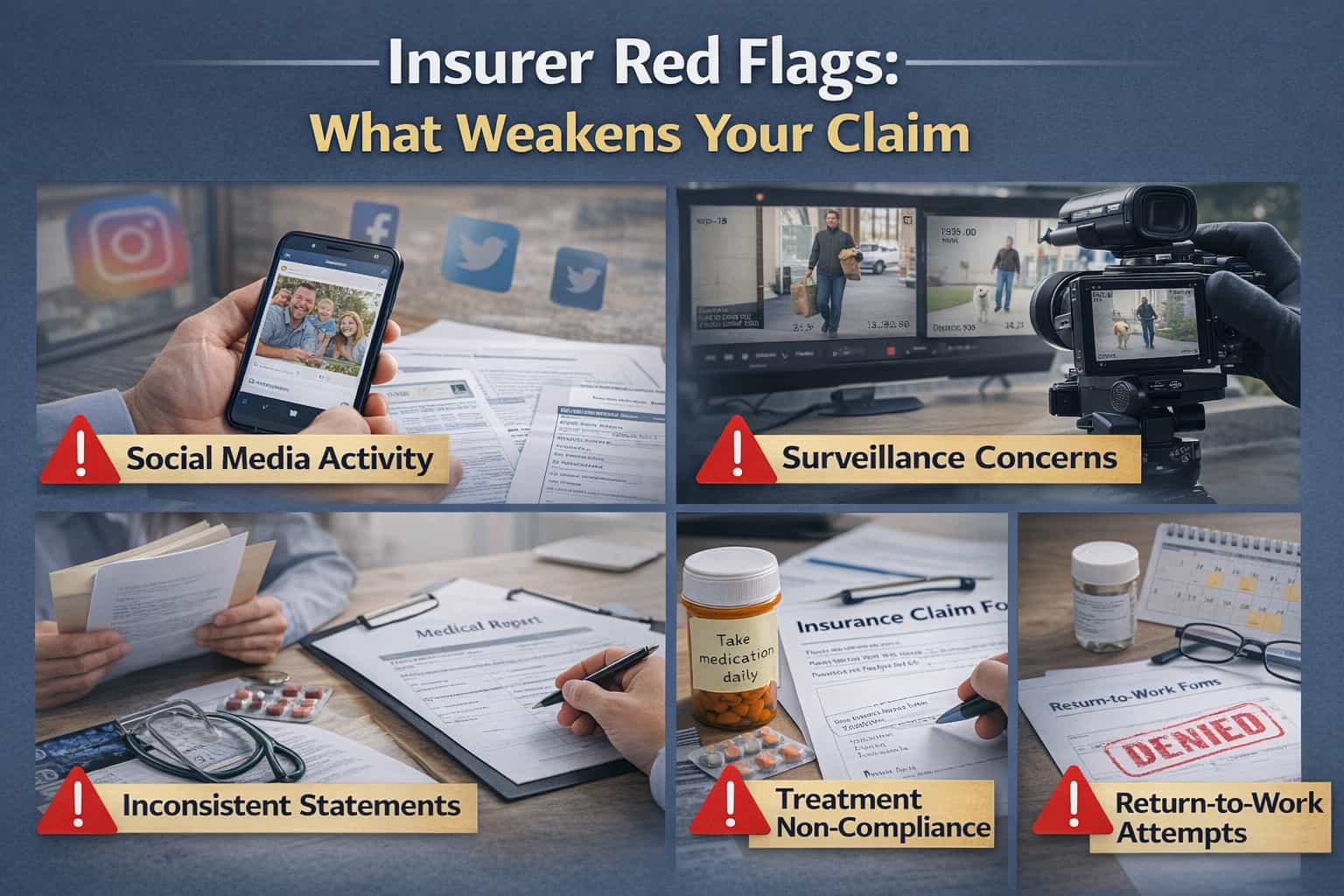
Understanding what insurance carriers look for when denying claims helps you avoid common pitfalls:
- Social Media Activity: A single photo of you smiling at a family gathering can be mischaracterized as evidence you’re not disabled—even though the photo doesn’t show the pain you experienced or the days of recovery required afterward.
- Surveillance Concerns: Insurance companies hire investigators to videotape claimants in public. Brief clips of you carrying groceries, walking your dog, or doing yard work can be taken out of context.
- Inconsistent Statements: Carriers look for discrepancies between what you tell different doctors, what you report to the insurer, and what your daily activity logs show. Be consistent and honest across all documentation.
- Treatment Non-Compliance: If your doctor recommends treatment and you don’t follow through, carriers may argue you’re not truly disabled or that you’re not making reasonable efforts to improve.
- Return-to-Work Attempts: If you’ve tried to return to work and failed due to your condition, document this thoroughly. These failed attempts actually strengthen your claim by demonstrating that, despite your best efforts, you cannot sustain employment.
Conditions That Require Extra Documentation
Certain conditions face heightened scrutiny in 2026 and require particularly strong evidence:
Long COVID
This condition is still being studied, and carriers often deny claims citing “insufficient objective findings.”
Strong Long COVID claims include:
- Documentation of acute COVID-19 infection
- Detailed symptom tracking showing persistent post-viral symptoms
- Specialist evaluations (pulmonology, cardiology, neurology)
- Functional testing (pulmonary function tests, cardiac workup, cognitive assessments)
- Clear documentation of post-exertional malaise
Chronic Fatigue Syndrome/ME
Carriers frequently deny these claims as “subjective.” Strengthen your case with:
- A formal diagnosis from a knowledgeable physician
- Documentation ruling out other conditions
- Detailed symptom logs showing a pattern of fatigue and post-exertional malaise
- Functional capacity evaluations
- Cognitive testing if brain fog is present
Fibromyalgia
Despite being a recognized condition, fibromyalgia claims face skepticism.
Essential evidence includes:
- A rheumatologist’s diagnosis
- Documentation of tender points or the widespread pain index
- Medication trials and responses
- Physical therapy records
- Detailed functional limitations
Mental Health Conditions
Depression, anxiety, PTSD, and bipolar disorder can be profoundly disabling but require strong psychiatric evidence:
- Regular treatment with a psychiatrist or psychologist
- Medication management records
- Therapy notes documenting symptoms and functional impact
- Psychological testing
- Documentation of how symptoms affect concentration, memory, social functioning, and reliability
How Kantor & Kantor Can Help
Building a strong LTD claim requires understanding both medical evidence and insurance company tactics. For over 45 years, Kantor & Kantor, LLP has exclusively represented individuals in disputes with insurance companies. We’ve handled thousands of disability claims and know exactly what evidence carriers respect—and what weaknesses they exploit.
We help clients nationwide:
- Evaluate claims before filing to identify evidence gaps
- Obtain strong supporting documentation from medical providers
- Challenge denials with comprehensive appeals
- Navigate ERISA requirements and deadlines
- Represent clients in litigation when necessary
- Handle claims under both group and individual policies
Whether you’re filing an initial claim, facing a denial, or simply want to ensure your documentation is strong, we provide experienced guidance tailored to your specific condition and situation.
5 Long-Term Disability Claim FAQs
Q: My condition doesn’t show up on tests, but I’m genuinely disabled. Can I still win my LTD claim?
A: Yes. Many disabling conditions—fibromyalgia, chronic fatigue syndrome, Long COVID, migraine disorders, mental health conditions—don’t produce abnormal lab work or imaging. These “invisible disabilities” require particularly strong documentation of symptoms and functional limitations.
Q: How detailed should my symptom logs be?
A: Detailed enough to demonstrate patterns and severity, but sustainable enough that you’ll actually maintain them. At minimum, note daily symptom severity (using a consistent scale), major activities attempted, effects of those activities, and any functional limitations you experienced. For fluctuating conditions, logs that show the pattern of good days and bad days are particularly valuable.
Q: Should I see a doctor more frequently to strengthen my claim?
A: Regular medical care is important, but frequency alone doesn’t strengthen a claim—the quality of documentation matters more. For chronic stable conditions, monthly or quarterly appointments with detailed clinical notes may be sufficient. For conditions that fluctuate or worsen, more frequent visits help document progression.
Q: My doctor is supportive but doesn’t provide much detail in their notes. What should I do?
A: Many excellent physicians provide minimal documentation simply because they’re not trained in disability claim requirements. Have a candid conversation with your doctor. Explain that you’re filing for disability benefits and that detailed documentation is crucial.
Q: The insurance carrier wants me to see their doctor for an Independent Medical Examination (IME). Should I be worried?
A: IMEs are concerning because the examining physician is paid by the insurance carrier and typically examines you for only 30-60 minutes—far less time than your treating physicians have spent with you. However, refusing to attend will likely result in termination of benefits. Prepare carefully: bring all relevant medical records, have someone accompany you if allowed, request that the exam be recorded, answer questions honestly but don’t minimize your symptoms, and afterward, obtain a copy of the IME report and have your treating physician review it for inaccuracies.
Don’t Face Your LTD Claim Alone
If you’re filing a disability claim, facing a denial, or want to ensure your evidence is as strong as possible, contact us today for a consultation. We’ll review your situation, identify any weaknesses in your documentation, and provide a clear path forward.
