

As a caregiver, few things are more frustrating than watching your loved one struggle with daily tasks while their long-term care (LTC) insurance company denies the benefits they desperately need. You’ve paid premiums for years, followed the rules, and submitted all the required paperwork—yet the claim was rejected. If this sounds familiar, you’re not alone. LTC claim denials are alarmingly common, but the good news is that many can be successfully overturned with the right approach.
Understanding Why LTC Claims Get Denied
Long-term care insurers often deny legitimate claims by misinterpreting policy language, downplaying medical evidence, or applying overly strict standards to benefit triggers. The two most common benefit triggers in LTC policies are:
- Activities of Daily Living (ADL) deficiencies: Most policies require the insured to require substantial assistance with at least two of the six ADLs—bathing, dressing, toileting, transferring, continence, and eating.
- Cognitive impairment: Policies typically cover care when someone requires substantial supervision due to cognitive decline, such as Alzheimer’s disease or dementia.
Insurance companies frequently argue that your loved one doesn’t meet these triggers, even when the evidence clearly shows otherwise. They may claim that the person can perform ADLs independently when they actually need hands-on help, or they might dismiss cognitive impairment as “not severe enough” to warrant benefits.
Building a Stronger Appeal: What Caregivers Need to Know
Our LTC claim attorneys can help you build a stronger appeal. Here are some recommendations:
1. Document ADL Deficiencies Thoroughly
The foundation of any successful LTC appeal is detailed, consistent documentation of ADL limitations. Generic statements like “needs help with bathing” aren’t enough. Insurance companies want to see specific evidence of the type and frequency of assistance required.
What caregivers should document:
- Detailed descriptions: Record exactly what help is needed for each ADL. For example, “Mom cannot step into the shower safely without physical support. She requires hands-on assistance to wash her back, legs, and feet due to limited mobility and balance issues.”
- Frequency and consistency: Note how often assistance is needed. Daily logs showing that help is required for specific tasks each day significantly strengthen your case.
- Safety concerns: Document any falls, near-misses, or unsafe situations that occur when your loved one attempts tasks independently.
- Time involvement: Record how long each task takes and the level of caregiver involvement required.
Keep a daily care journal with timestamps and specific observations. This contemporaneous documentation carries far more weight than retrospective summaries.
2. Gather Compelling Cognitive Impairment Proof
When cognitive decline is the basis for benefits, insurers often try to minimize the severity of impairment. They might argue that your loved one can still hold a conversation or remember certain details, therefore doesn’t need supervision.
Essential evidence for cognitive impairment claims:
- Neuropsychological testing: Formal cognitive assessments from neurologists or neuropsychologists provide objective measurements that are difficult for insurers to dispute.
- Specific examples of unsafe behavior: Document incidents of wandering, leaving stoves on, getting lost in familiar places, medication errors, or inability to recognize danger.
- Functional impact: Show how cognitive decline affects daily life—missing appointments, inability to manage finances, poor hygiene, confusion about time and place.
- Progression timeline: Demonstrate how cognitive function has declined over time with dated examples and medical records.
Remember, cognitive impairment isn’t just about memory loss. It includes impaired judgment, disorientation, and the inability to protect oneself from health and safety threats.
3. Obtain Comprehensive Facility and Medical Notes
Healthcare provider documentation is crucial evidence that caregivers should actively request and review.
Key documents to collect:
- Nursing assessments: Facility nurses conduct regular evaluations of residents’ ADL capabilities and care needs. Request copies of all assessment forms.
- Care plans: These documents outline the specific assistance your loved one receives daily and why it’s necessary.
- Physician statements: Ask doctors to provide detailed letters explaining functional limitations, not just diagnoses. The letter should specifically address ADL deficiencies or cognitive impairment and the need for supervision or hands-on assistance.
- Incident reports: Any documented falls, behavioral incidents, or safety concerns support the claim that supervision is necessary.
- Medication administration records: These can demonstrate cognitive impairment if your loved one cannot self-administer medications safely.
Review these documents carefully before submitting them. Sometimes facility notes may inadvertently suggest more independence than actually exists. If you notice inconsistencies, discuss them with the healthcare providers and request clarifications or amendments.
4. Challenge Misinterpretations of Policy Language
Insurance companies excel at finding ways to interpret policy language in their favor. Common tactics include:
- Redefining “substantial assistance”: Claiming that verbal cues or standby assistance don’t count, even though many policies cover these forms of help.
- Imposing stricter standards than the policy requires: Arguing that the insured must be completely unable to perform an ADL, rather than requiring substantial assistance.
- Cherry-picking evidence: Focusing on good days while ignoring the overall pattern of need.
- Misapplying elimination periods: Incorrectly calculating waiting periods before benefits begin.
Carefully review your policy language and compare it to the insurer’s denial reasoning. Often, the denial letter misrepresents the policy’s requirements.
Actionable Steps for Caregivers
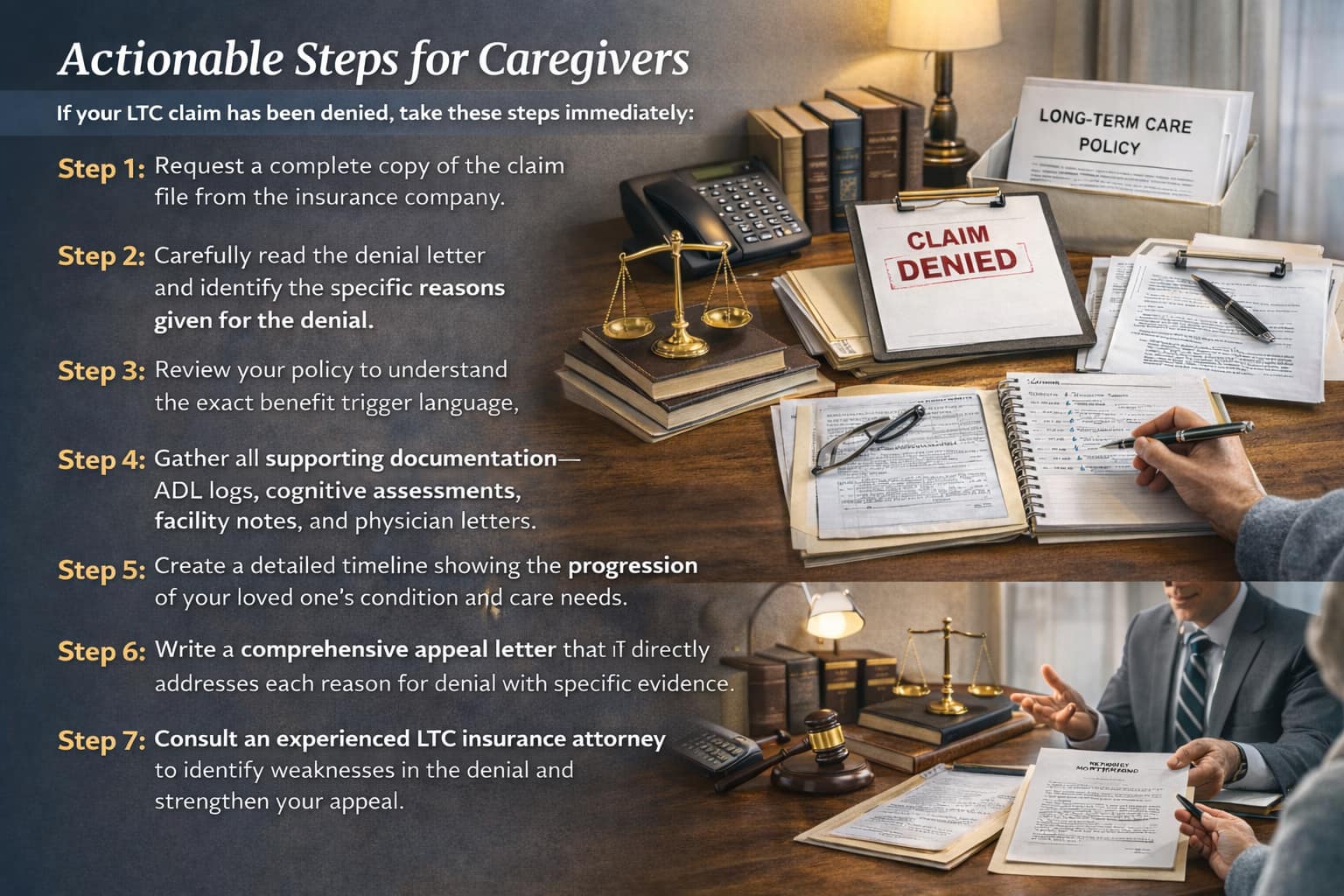
If your LTC claim has been denied, take these steps immediately:
Step 1: Request a complete copy of the claim file from the insurance company, including all medical records they reviewed and internal notes about the decision.
Step 2: Carefully read the denial letter and identify the specific reasons given for the denial.
Step 3: Review your policy to understand the exact benefit trigger language and compare it to the insurer’s interpretation.
Step 4: Gather all supporting documentation—ADL logs, cognitive assessments, facility notes, and physician letters.
Step 5: Create a detailed timeline showing the progression of your loved one’s condition and care needs.
Step 6: Write a comprehensive appeal letter that directly addresses each reason for denial with specific evidence.
Step 7: Consult an experienced LTC insurance attorney to identify weaknesses in the denial and strengthen your appeal.
How Kantor & Kantor, LLP Can Help
At Kantor & Kantor, we understand the emotional and financial strain of fighting an LTC insurance denial while caring for a loved one. Our California-based firm has extensive experience holding insurance companies accountable for wrongfully denying benefits.
We can help you:
- Analyze your policy and denial: We’ll identify where the insurance company misapplied policy terms or ignored evidence.
- Gather and organize compelling evidence: We know exactly what documentation will be most persuasive in your appeal.
- Handle all communication with the insurer: You can focus on caregiving while we fight for your benefits.
- Prepare a powerful appeal: Our attorneys craft comprehensive appeals that address every aspect of the denial.
- Litigate if necessary: If the appeal is unsuccessful, we’re prepared to take your case to court.
Many families see their claims approved after we get involved, often without needing to file a lawsuit. Don’t let an insurance company’s initial denial be the final word on your loved one’s care.
Frequently Asked Questions About LTC Claim Denials
Q: How long do I have to appeal an LTC claim denial?
A: Appeal deadlines vary by policy, but typically range from 60 to 180 days from the date of the denial letter. Check your policy’s appeal provisions immediately and don’t miss this deadline—it’s usually strictly enforced. If you’re unsure, contact an attorney right away to protect your rights.
Q: Can the insurance company deny my claim because my loved one’s condition might improve?
A: No. LTC benefits are based on your loved one’s current functional abilities and care needs, not speculation about future improvement. If they currently meet the policy-defined benefit triggers, they should receive benefits. Insurers sometimes improperly deny claims for conditions they deem “temporary,” but many policies don’t require permanence.
Q: What if the insurance company’s assessor said my loved one doesn’t need help, but we know they do?
A: Insurance company assessments are often biased and may not reflect your loved one’s true daily needs. These assessments might only capture a brief snapshot on a particularly good day. You can challenge these findings with detailed caregiver logs, facility documentation, and independent medical opinions that paint a more accurate picture of ongoing care needs.
Q: Does my loved one need to be in a nursing home to receive LTC benefits?
A: Not necessarily. Most modern LTC policies cover care in various settings, including assisted living facilities, adult day care, and home care. Review your specific policy’s coverage provisions. Some insurers wrongfully deny claims by arguing that the care setting doesn’t qualify, even when the policy clearly covers it.
Q: Should I hire an attorney before or after filing an appeal?
A: Ideally, consult an experienced LTC attorney before filing your appeal. A poorly crafted initial appeal can actually hurt your case by locking you into weak arguments or incomplete evidence. An attorney can ensure your first appeal is as strong as possible, significantly improving your chances of success. Most LTC attorneys, including Kantor & Kantor, offer consultations to evaluate your case.
Don’t Give Up on the Benefits Your Loved One Deserves
LTC insurance exists to provide financial protection when care is needed most. If your claim has been denied, remember that this is often just the insurance company’s opening position, not the final answer. With thorough documentation, a clear understanding of your policy, and persistent advocacy, many denials can be overturned.
As a caregiver, you’re already shouldering an enormous responsibility. You don’t have to fight the insurance company alone. Kantor & Kantor, LLP is here to help California families secure the LTC benefits they’ve paid for and deserve.
Contact us today for a consultation. Let us handle the legal battle while you focus on what matters most—caring for your loved one.
