
The Wit v. United Behavioral Health class action was narrowed on appeal, leaving members to pursue benefit claims individually. The tolling period for those claims expired July 30, 2026.
A group of patients and family members has filed a federal lawsuit against United Behavioral Health, also known as Optum Behavioral Health, seeking payment for mental health and substance use disorder treatment the insurer refused to cover. The case, J.B. v. United Behavioral Health, Case No. 3:26-cv-08713-RS, was filed on August 20, 2026, in the U.S. District Court for the Northern District of California.
The complaint alleges UBH relied on its own internal Level of Care Guidelines to deny coverage for residential and outpatient treatment even when patients’ treating physicians said the care was necessary. According to the complaint, those guidelines were written to be more restrictive than the standards the clinical community accepts and were used to control costs at the expense of members seeking care.
What happened in Wit
The case builds on Wit v. United Behavioral Health, decided in the same court. After a full trial, a federal judge found that UBH’s guidelines from 2011 through 2017 deviated from generally accepted standards of care and were adopted in the company’s own financial interest. The court reaffirmed that finding in August 2025 and, in February 2026, extended an injunction barring UBH from returning to those guidelines through 2031. Roughly 67,000 claims, involving approximately 50,000 members, were evaluated under the guidelines at issue.
Why individual claims now matter
Wit was brought as a class action, meaning a single case could have resolved those claims together. On appeal, the Ninth Circuit narrowed it, and the portion that could have returned money to individual members was reversed. As a result, an individual lawsuit may now be the only route by which a Wit class member can seek payment of the benefits at issue.
The deadline
While Wit moved through the courts, the limitations period for individual members to bring their own claims was paused or tolled. That pause ended on July 30, 2026, and the clock is running again.
How much time remains depends on the terms of each member’s plan and the circumstances of the individual claim. There is no single common deadline, which is why members should get advice on their own situation rather than assume the date that applies to someone else.
Who may be affected
Former Wit class members, and their family members, had a claim for residential or outpatient behavioral health treatment denied by UBH between 2011 and 2017.
Request a no-cost review
If you believe a UBH behavioral health claim was denied between 2011 and 2017, you can submit your contact information and a brief description of your claim for a no-cost review. Submitting information does not create an attorney-client relationship.
Email: Bryan.D.Thomson.legal@gmail.com
Phone: (270) 632-8298
The plaintiffs are represented by Bryan D. Thomson, Attorney at Law, PLLC; Lisa Kantor and Tim Rozelle of Kantor & Kantor, LLP; and David Lilienstein and Katie Spielman of DL Law Group.
This release was distributed via PR Newswire on October 7, 2026.
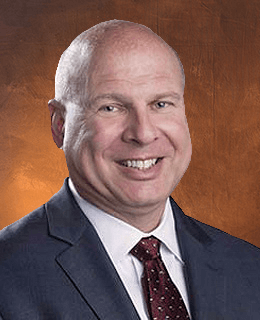
Attorney Glenn R. Kantor
Glenn Kantor is a founding partner of Kantor & Kantor LLP. As a young attorney, Glenn saw the injustice of wrongful insurance denials and created a law firm to represent individuals seeking to obtain their rightful benefits. Glenn is committed to ensure that clients receive the benefits they are entitled to under their insurance policies or group health plans. [Attorney Bio]